



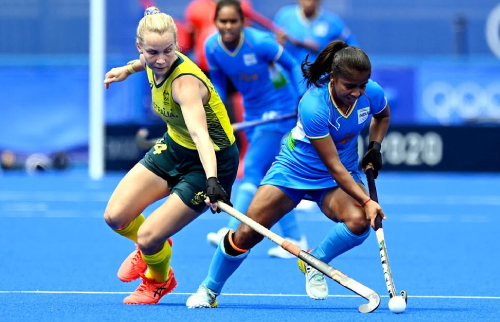


With the next Olympic hockey tournaments set to take place in Los Angeles, USA, in less than two years, we spoke exclusively to the hosts - the women’s and men’s US national teams - when we met them at the FIH Hockey Nations Cup earlier this year. Today, we hear from David Passmore, Head Coach of the US women’s team.
When David Passmore first set foot in Los Angeles to survey the prospective venues for the upcoming Olympic Games, the gravity of the occasion registered instantly. For a coach whose hockey journey has spanned high-performance setups across Europe, the sheer scale of a home Olympics left an indelible mark.
“The realism really hit when I first went to LA,” Passmore admits. “It feels like another country because it’s five hours away. When you see the stadiums and everything, that really hit hard. I don’t think our athletes truly understood what a big thing it was until they went to Paris, because for all of them, it was their first Olympic Games. Once you're there, you realize the enormity of the whole event. To have that on home turf next is phenomenally exciting.”
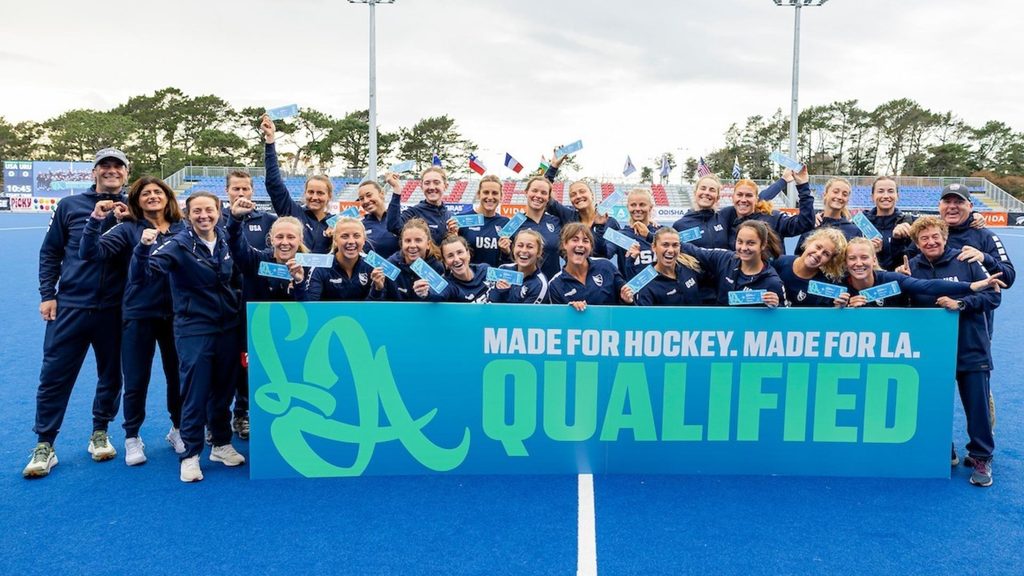
Cruel Margins and Lasting Lessons
At the Paris 2024 Olympic Games, a young, hungry United States women’s team showed glimpses of their high-ceiling potential, unsettling traditional powerhouses with dynamic speed and defensive grit. However, elite tournament hockey rarely hinges on broad brushstrokes; it is decided by ruthless, razor-thin moments.
Reflecting on their pool-stage exit, Passmore points specifically to their decisive encounter against Spain.
“Big tournaments always come down to small moments and little details,” he explains. “We were 1-0 up against Spain and conceded a goal we had worked so hard to prevent, purely because we weren’t set in our defense. Had Spain not scored that goal, we would have progressed to the quarterfinals. One of the things we pride ourselves on is how quickly we set up defensively, so that was a stark realization of how tiny margins dictate outcomes.”
Rather than brush the heartbreak aside, Passmore and his staff addressed it immediately. The morning after their elimination, the squad spent over two hours formally logging every key takeaway—notes Passmore still reviews regularly.
“I still have them in a file,” he says. “Distractions around the field have to be controlled. In Paris, some athletes changed their routines because of the magnitude of the event, and you should never change your routine. We have a team psychologist who won gold and bronze with Great Britain’s women, and she knows full well what those distractors look like.”
Harnessing the Home Wave
The presence of American fans in Paris was a big highlight, offering a teaser of what awaits on home soil. Yet Passmore is cautious about the emotional turbulence a partisan crowd can bring.
“The number of American spectators in Paris surprised me. If you multiply that by three or four in LA, the noise and enthusiasm will be phenomenal. But we have to adapt so that we don’t blindly ‘go with the crowd.’ When the noise goes up, human nature is to rush. Sometimes you need the discipline to slow the game down.”
On the pitch, the coaching staff has laid down distinct tactical pillars for the cycle ahead. Chief among them is developing tactical fluency beyond North American borders.
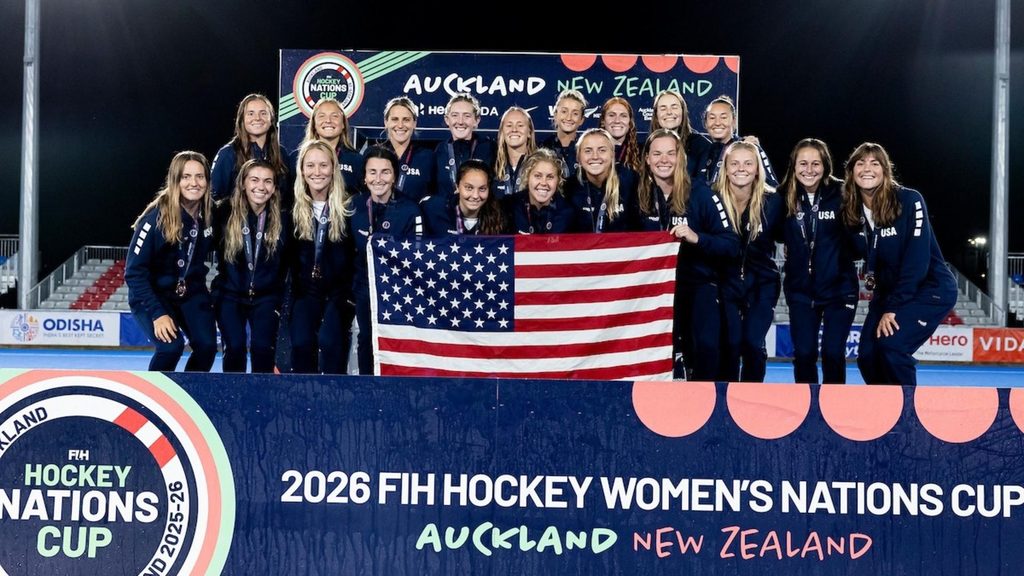
“The college game dominates the hockey landscape in the US, and it has a particular style,” Passmore notes. “Our players need to understand how the European, Asian, and Oceania styles differ. Playing games against different opponents through different competitions like the Nations Cup helps immensely. Beyond that, our focus is sharpening defensive structures, utilizing our midfield speed, and turning our penalty corner unit into a lethal, world-class setup with diverse options.”
More Than Medals: Inspiring a Generation
While podium finishes remain the ultimate athletic objective, Passmore's vision extends far beyond metal and ribbons. The platform of a home Games is a generational opportunity to elevate hockey in a sports market dominated by legacy giants.
“As a group, we sat down after Paris and agreed that creating a legacy is vital,” Passmore says. “Legacy means setting the bar as high as possible for the next generation—in our behaviors, how we train, and our standards. But it also means growing the game. Hockey is still tucked away in small pockets of America; we want it seen. We want our players to be role models that young boys and girls, not just hockey players, aspire to emulate.”
Having witnessed Great Britain capitalize on Olympic gold in 2016, Passmore also draws on his experience as part of Ireland’s historic silver-medal run at the 2018 Women’s World Cup.
“In Ireland, we had 15,000 people on the streets and national television coverage, but as a sport, we didn't fully build on it,” Passmore reflects. “You have to be ready for growth before it happens. USA Field Hockey’s development unit is working hard on initiatives so that when the Olympic spotlight hits, the infrastructure is ready.”
The Right Trajectory
With a little under two years remaining to fine-tune the engine, Passmore believes the squad is situated in the sweet spot of development.
“Two years is the perfect amount of time,” Passmore concludes. “Our age profile is right: young in caps, but high in potential. We have speed, flair, and an identity taking shape. To every fan back home: get out there in red, white, and blue. That energy is the extra edge that will make all the difference.”
